














How to use roman rings
Learn how to train with Roman rings to develop shoulder stability, core strength and control with scalable bodyweight movements and technique tips.
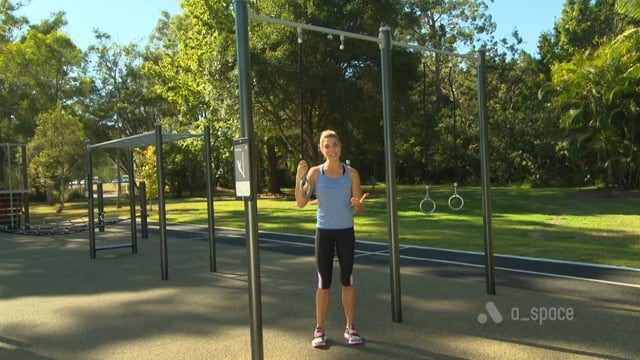
Build strength, control and mobility
Roman rings are a staple of gymnastics training—but they’re also a powerful tool for anyone wanting to build upper body and core strength outdoors. Suspended from a stable frame, the rings introduce instability into each movement, forcing your muscles to work harder to stay balanced. The result? Improved coordination, deeper muscle activation, and increased control.
Whether you’re a beginner mastering a simple hold or an advanced user working toward ring dips or rows, roman rings offer scalable, full-body training in a compact outdoor setup.
What muscles do roman rings exercises work?
Roman rings are all about control and stability. Even basic movements recruit a wide range of muscles, including:
- Shoulders and deltoids – constantly working to stabilise the arms
- Chest and triceps – activated during dips and pressing movements
- Back and lats – engaged during rows and holds
- Biceps and forearms – for pulling strength and grip
- Core and obliques – working overtime to keep your body aligned
- Glutes and lower back – assisting in movements like ring support holds
Because of the instability, even small movements on the rings demand total-body coordination and strength.
Technique tips: Getting started with roman rings
Rings can be intimidating at first, so it’s best to begin with static holds and progress from there. Start with these basics:
Ring support hold (beginner):
- Stand between the rings, grip them with palms facing in.
- Jump or step up until your arms are fully extended, elbows locked, and rings beside your hips.
- Keep your core tight and body upright.
- Hold this position for 5–15 seconds, then lower with control.
Ring row (intermediate):
- Adjust the rings to waist height.
- Lean back with your body in a straight line, gripping the rings.
- Pull your chest toward the rings, keeping elbows close to your body.
- Lower with control and repeat.
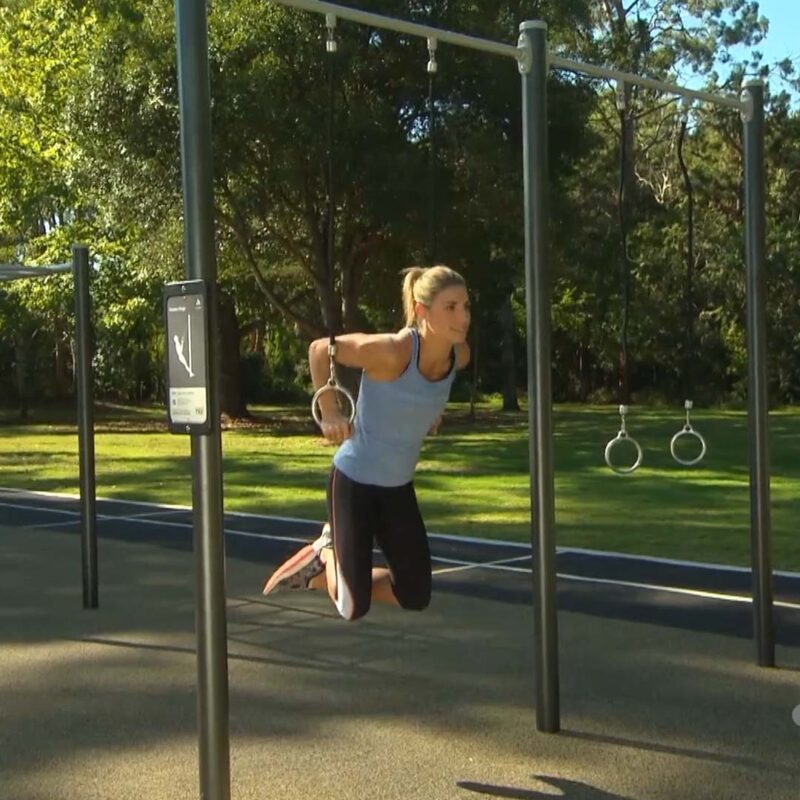
Ring dip (advanced):
- Begin in a support hold.
- Slowly lower your body by bending your elbows, keeping the rings close.
- Press back up to full extension.
Always focus on stability and alignment. If your arms or rings start to shake uncontrollably, scale back to a simpler variation or reduce reps.
How many sets and reps?
Ring training is all about quality, not quantity. Aim for:
- Beginners: 3 sets of 5–10 second support holds or 3 sets of 8 ring rows
- Intermediate: 3–4 sets of 10–12 ring rows or assisted dips
- Advanced: 4 sets of 6–10 ring dips or isometric holds with controlled tempo
Rest 60–90 seconds between sets, especially if working on stability or isometric strength.
Progressions and regressions
One of the great things about roman rings is how easy it is to scale exercises up or down:
Make it easier:
- Use a band or foot support for assisted dips or rows
- Shorten the range of motion
- Focus on holds and stability before adding reps
Make it harder:
- Add tempo (e.g. 3-second lowering phase)
- Try ring push-ups or leg raises
- Work toward advanced movements like L-sits or muscle-ups (with caution)
The instability of the rings means even simple movements remain challenging for longer, making them ideal for building slow, controlled strength.
Common mistakes to avoid
- Rushing through reps: Control matters more than speed
- Letting the rings swing: Try to keep them close to your body throughout
- Shrugged shoulders: Keep shoulders down and engaged to protect your neck
- Loose core: Maintain tension from head to toe to stay aligned
If your form breaks down, it’s better to reset than to push through with poor control.
Why roman rings are great for outdoor training
Rings take bodyweight training to the next level. In our outdoor fitness environments, roman rings are securely installed to support safe training in all conditions. They’re compact, durable, and offer endless variety—from gentle rehabilitation movements to gymnastic-level strength skills.
Because they require no additional weight or gear, roman rings are ideal for training in parks, schools, and shared community spaces.
Getting started
Not sure where to begin? Start with support holds and rows, gradually increasing your time under tension. Focus on engaging your core and moving with control. Within a few weeks, you’ll notice improvements in grip strength, posture, and upper body tone.
For more bodyweight training ideas and how-to videos, check out the full Exercise guide.
View all exercise guides