












How to use jump boxes
Explore how to use jump boxes for plyometric training that builds explosive lower-body strength, power, balance, and agility with scalable progressions and technique tips.
Build explosive power with outdoor training
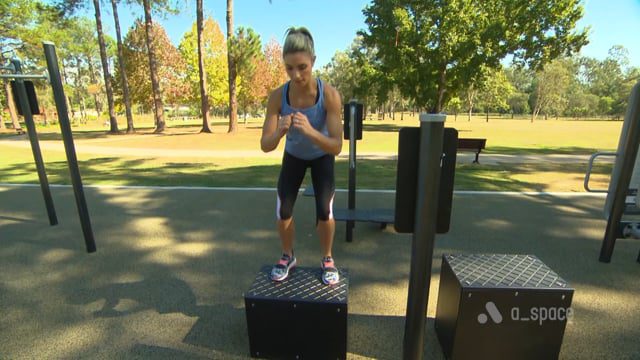
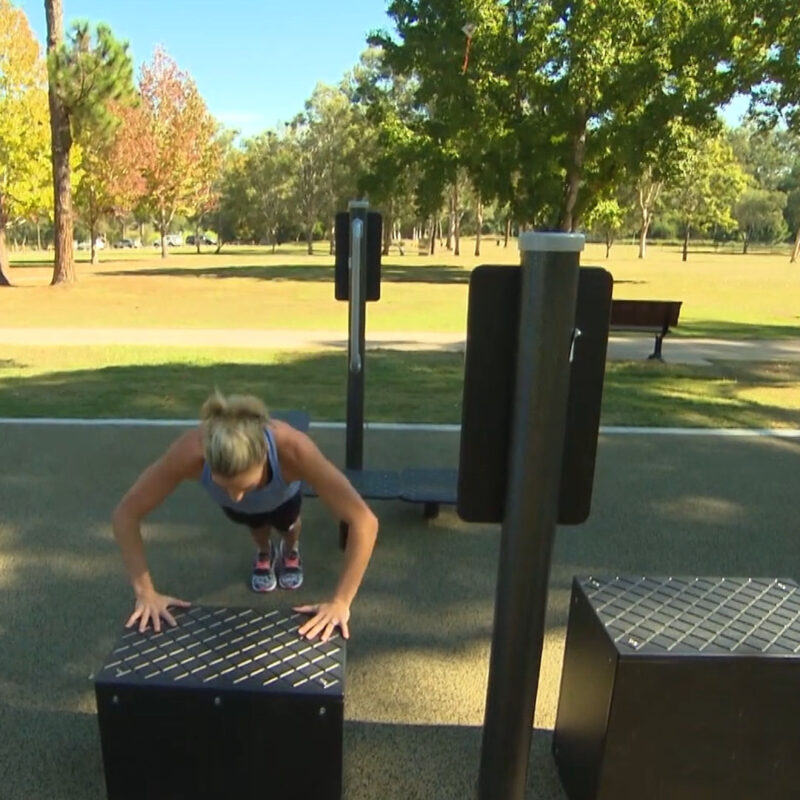
Jump boxes are a dynamic and versatile addition to any outdoor fitness space. Also known as plyo boxes, they’re designed to help you develop explosive power, build lower body strength, and sharpen coordination. From beginner-friendly step-ups to full box jumps, these platforms offer scalable options for all fitness levels.
At ASpace, jump boxes come in three different sizes to suit varying abilities and progressions:
- 450mm high – a great starting point for beginners
- 590mm high – for intermediate or more confident users
- 450mm–600mm combo – with two heights in one for more flexible workouts
What muscles do jump box exercises work?
Jump box movements are plyometric exercises that target:
- Glutes, quads, and hamstrings – essential for the jumping motion
- Calves – used during take-off and landing
- Core – engaged throughout to maintain stability
- Hip flexors – for explosive upward movement
Beyond strength, jump boxes also help improve agility, balance, cardiovascular fitness, and overall athletic performance.
Technique tips: How to do a proper box jump
Using correct form is key to maximising performance and minimising risk. Here’s how to perform a standard box jump:
- Stand with feet shoulder-width apart, facing the box at a safe distance (about one step away).
- Engage your core and swing your arms back, bending your knees slightly to load the jump.
- Explode upwards by swinging your arms forward and jumping onto the box, landing softly on both feet.
- Land in a half squat, knees slightly bent, chest up, and feet fully on the box.
- Stand tall, then step down carefully—don’t jump down, as this increases the risk of injury.
For beginners, start with step-ups or low hops before progressing to full jumps.
How many sets and reps?
Here’s a guide to structure your session, based on your experience level:
- Beginners: 2–3 sets of 6–8 step-ups or low-impact jumps
- Intermediate: 3–4 sets of 6–10 full box jumps
- Advanced: 4–5 sets of 8–12 box jumps at increased height or intensity
Rest for 60–90 seconds between sets to recover fully—these exercises are high-impact and demand energy.
How to make jump box training easier or harder
The great thing about ASpace jump boxes is the ability to scale up or down:
Make it easier:
- Use the 450mm box for lower impact
- Start with step-ups or seated jumps
- Focus on tempo and technique over height
Make it harder:
- Progress to the 590mm or 600mm box
- Try single-leg step-ups or lateral jumps
- Add a squat jump before launching onto the box
With the 450mm–600mm combo box, you can flip it for extra height as you progress.
Common mistakes to avoid
- Landing too hard: Aim for soft, quiet landings to protect your joints
- Jumping too close or too far: Start at a comfortable distance and adjust as needed
- Not fully extending: Land with your whole foot on the box and stand tall at the top
- Skipping the step-down: Always step down one foot at a time to reduce joint strain
Why jump boxes are great for outdoor workouts
Jump boxes offer high returns in a short amount of time. They’re perfect for circuits, warm-ups, or full-body HIIT sessions. In an outdoor community fitness setting, they add a fun and challenging element to group workouts and are great for building athletic capacity at all ages.
With three size options and durable Australian-made construction, ASpace jump boxes are built for long-term use in parks, schools, and shared spaces.
Getting started: Your first session
If you’re new to plyometric exercises, start with low-impact variations and build confidence gradually. Choose a box height that feels achievable, focus on form, and listen to your body. Over time, you’ll build strength, power, and coordination.
Want more outdoor workout ideas? Explore the full Exercise guide to plan your next session.
View all exercise guides